Author Archives: Travis Normand

Unknown's avatar

About Travis Normand

Attorney, Husband, and Father. - Interests: College Football, Rugby, Cigars, Freemasonry, History, Research, Writing, LOAC / IHL, Law, and much more.

Pentagon to Award Medals for Drone Strikes

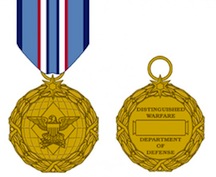
Distinguished Warfare Medal-17K

This image released by the Department of Defense shows the . . . newly announced Distinguished Warefare Medal. The Pentagon is creating the new medal that can be awarded to troops who have a direct impact on combat operations but do it from afar. The medal will be awarded to individuals for “extraordinary achievement” related to a military operation. (AP Photo/Department of Defense)Link to source

Click HERE to see enlarged photo of medal.

Continue reading

DOJ “white paper” memo provides legal justification for drone strikes against US citizens

by Travis Normand

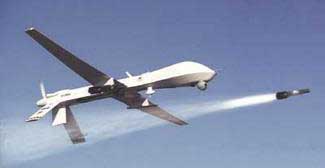
Reaper UAV Taxis at Kandahar Airfield

Here is a link to the memo that was obtained by NBC.com, as well as the accompanying story that NBC posted.

Obama administration to codify U.S. drone policy

by Travis Normand

I found this article on NYTimes.com about how the Obama administration is looking to codify the U.S. drone policy. The article is quite fascinating and addresses a few of the larger complaints and challenges concerning drone usage.

Click HERE to read the entire article.

While reading the article, I had several thoughts which I wanted to address here.

My first thought came after reading the following quote:

“One of the things we’ve got to do is put a legal architecture in place, and we need Congressional help in order to do that, to make sure that not only am I reined in but any president’s reined in terms of some of the decisions that we’re making,” Mr. Obama told Jon Stewart in an appearance on “The Daily Show” on Oct. 18.

In the quote above, President Obama states that he needs “Congressional help” in order to put a legal architecture in place for the drone policy. My first thought was that as Commander in Chief, the President has historically been very careful to keep congress out of the decisions of who was designated an enemy combatant.  It will be interesting to see how much congressional help he will accept and what this will do to any current precedent.

Continue reading

LOACBlog.com listed on State Bar of Texas’ website

by Travis Normand

I was informed today that the State Bar of Texas has listed the LOACBlog.com on the Texas law blog page of their website.  It is an honor to be included, and I would like to thank the State Bar of Texas for listing this site among so many other great legal blogs.

LOACBlog.com is one of 140 blogs that are listed on the website.  It can be found under the heading “International Law” and is currently the first, and only, international law blog listed!

You can see the entire list of blogs HERE.

Continue reading

The US Drone Program and the Disposition Matrix

by Travis Normand

I received an email today from the WashingtonPost.com which contained links to the following resources, articles, and videos. The information concerned the U.S.’s drone program and the “Disposition Matrix.”  It is very interesting stuff and I wanted to share it here with anyone else who may be interested.

Plan for hunting terrorists signals U.S. intends to keep adding names to kill lists
By Greg Miller, Published: October 23
WashingtonPost.com

Over the past two years, the Obama administration has been secretly crafting a next-generation plan to capture and kill suspected terrorists, according to current and former U.S. officials.

The “disposition matrix,” revealed here in part one of a three-part Washington Post series on U.S. counterterrorism policies, reflects an effort by top national security officials to create an infrastructure capable of sustaining a seemingly endless war.

Continue reading this article HERE.

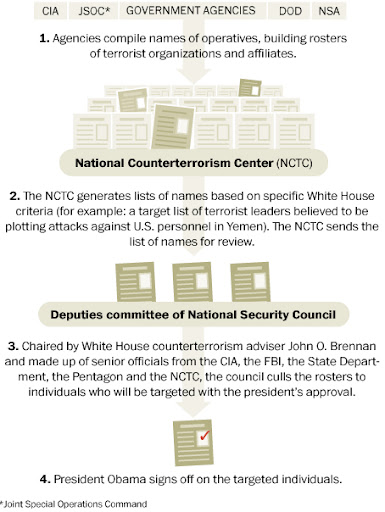
See also, The process behind targeted killing

See also, Tracking America’s drone war [Database of Drone Strikes]

The Process Behind Targeted Killing

ADVANCED COURSE ON THE LAW OF ARMED CONFLICT (LOAC)

by Travis Normand

Mark your calendars for the Advanced Course on the LOAC in Sanremo, Italy.  This course is sponsored by the International Institute of Humanitarian Law.

I first heard about the International Institute of Humanitarian Law a few years ago and have wanted to attend one of the organization’s workshops/conferences ever since.  My goal is to someday actually make it to Sanremo, Italy for one of these.

If you have the ability to attend, I have heard that it is more than worth the time and effort it takes to get there.

Advanced Course on the Law of Armed Conflict (LOAC)
1- 5 October 2012
Sanremo, Italy

The Advanced Course on Law of Armed Conflict (LOAC) is conducted in either English or French.  The Courses will run concurrently from 3 – 7 October 2011.  These courses provide a practical and contemporaneous consideration, at an advanced level, of LOAC issues with a particular focus on those impacting on interoperability in multinational operations.

Link to course website.

American Terrorism is a Criminal Matter

by Travis Normand

Here is another example of how terrorist activities are typically treated as a criminal matter, and not a LOAC matter, when they are attempted on U.S. soil.

US prosecutor: 18-year-old arrested for attempting to set off car bomb outside Chicago bar
Washington Post (WashingtonPost.com)
By Associated Press, Published 15 September 2012

CHICAGO — Undercover FBI agents arrested an 18-year-old American man who tried to detonate what he believed was a car bomb outside a downtown Chicago bar, federal prosecutors said Saturday.

Adel Daoud, a U.S. citizen from the Chicago suburb of Hillside, was arrested Friday night in an undercover operation in which agents pretending to be terrorists provided him with a phony car bomb.

Read the entire article HERE!

Continue reading

Casebooks on Insurgency and Revolutionary Warfare (for Download)

by Travis Normand

I wanted to make everyone aware that there is a new book (downloadable in PDF format) titledCasebook on Insurgency and Revolutionary Warfare Volume II:  1962-2009.”  (888 pages)

This new resource is great for those interested in studying unconventional warfare, irregular warfare, insurgency, and counterinsurgency.

Further, the Volume II casebook was produced by the US Army Special Operations Command and The Johns Hopkins Applied Physics Lab National Security Analysis Department.  Volume II is the result of a four-year project of updating Volume I, which was created in the 1960’s by the Special Operations Research Office.

Both versions (Vol. I and II) can be downloaded at:  WarFareCenter.com OR SmallWarsJournal.com

A “Must Read” Article for Anyone New to the LOAC

by Travis Normand

When I started this blog, one of my main purposes was to create a place where people could go to learn about the Law of Armed Conflict (LOAC or IHL).  It was my hope to create a place where you could find (1) basic information that facilitates an understanding of the LOAC, (2) links to other online LOAC resources, (3) current news concerning the LOAC, and (4) some commentary on the LOAC-related current events and news.

So, in keeping with No. 2 above, I must post an article that I found this morning:

Continue reading

Geoffrey Corn Responds to Mark Mazzetti, The Drone Zone

by Travis Normand

The following article appeared today over at LawfareBlog.com and contains Prof. Geoffrey Corn’s response to Mark Mazzetti’s recent article (The Drone Zone).   Mazzetti is a national-security correspondent for The [NY] Times and is currently writing a book about the C.I.A. since 9/11.

If you haven’t visted LawfareBlog.com, I highly recommend that you do.  It is one of the best, if not the best, sites covering all things related to the LOAC and National Security Law.  Some of the best and most knowledgeable people in this field regularly contribute at LawfareBlog.com and you are sure to enjoy it.


GEOFFREY CORN RESPONDS TO MARK MAZZETTI, THE DRONE ZONE

By Kenneth Anderson
Monday, July 9, 2012 at 5:04 PM

Geoffrey Corn, professor of law at South Texas College of Law and former JAG officer and chief of the law of war branch of the international law division of the US Army, sends in the following comment on Ken Anderson’s earlier post on Mark Mazzetti’s New York Times Magazine article, “The Drone Zone.”  Our thanks to Geoff for the contribution:

[Prof. Geoff Corn’s Response:]

It seems especially troubling that anyone would suggest that stand-off warfare somehow negates the moral challenges associated with decisions that result in the taking of human life. In fact, it is quite possible that these type of targeting modalities produce unique moral challenges for the warrior. Underestimating the impact of having to set in motion kinetic weapons that kill others is unfortunate and misleading. Death and killing are an inevitable consequence of armed hostilities. While it is tempting to suggest that stand-off capabilities make this process easier for the warrior, the fact remains that moral individuals have to make those incredibly difficult decisions and have to live with the consequences of their actions.

There’s a certain moral clarity in close combat, to be sure, where one is personally at risk – exigency provides an often clear and unambiguous moral framework for the trigger puller, kill or be killed.  But that’s not the ideal kind of moral clarity; the ideal moral clarity allows for deliberation – and that deliberation is served by lowering personal risk to oneself and one’s forces and having time.  In other words, there’s another kind of moral clarity where the trigger puller – or the commander giving the order – is not at risk, does not have to consider the bare necessity of self-survival or the survival of those under one’s command, and can think harder about the strategic and tactical, moral and legal, reasons for pulling the trigger. It makes the moral decision harder, not easier, and perhaps not as clear as that of personal risk – but it is the kind of deliberative decision-making that drones (sometimes at least) allow us and which we should prefer, all things equal.

It therefore seems to me that stand-off warfare involves its own set of complex moral challenges for the warrior. For example, the process of going to work in the morning, engaging enemy belligerent targets with deadly force, and leaving that evening to return to the normalcy of the home and family place the warrior in an environment of conflicting contexts unlike any of his or her peers in the battle-space.  (Those who endured the two years of low intensity confrontations with the Panamanian Defense Forces in the late 1980s had a small taste of this, living in Panama with their families in the same place where they routinely conducted operations to defend U.S. facilities against the PDF.)

It is a mistake to assume killing, even in war, is easy. It is not. Indeed, the challenge of training warriors to kill on order has been a major focus of military training. As Telford Taylor noted, “war does not provide a license to kill; it creates a duty to kill.” I doubt that duty is easier to reconcile with moral instincts for a stand-off drone operator than a pilot engaged in close air support.

How stand-off warfare will impact the nature of armed hostilities is obviously an important and complex issue. Let’s not lose sight of the fact, however, that in the end it still requires us to call upon members of our society – individuals with exceptional moral and ethical instincts – to “pull a trigger.” I don’t think attenuation from the target makes that decision any easier.  It may in fact make it harder.

http://www.lawfareblog.com/2012/07/geoffrey-corn-responds-to-the-kas-post-on-mark-mazzettis-the-drone-zone/