by Travis Normand
Jeremy Scahill has come out and clarified the statements he made on MSNBC’s “Up With Chris Hayes” by stating that:
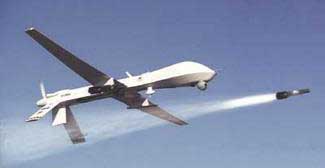
Just a point of clarification. If you actually listen to what I was saying on “Up With Chris,” I was discussing two specific cases. One, was the December 17, 2009 cruise missile strike on the Yemeni village of al Majala. I investigated that strike on the ground in Yemen, and did a 30 minute documentary on it for al Jazeera. It was the first strike Obama authorized on Yemen. The vast majority of the victims–35 in all–were women and children. The US used horrendous cluster bombs in that attack, which shred human beings into ground meat. Unexploded bombs killed more people a few days after the strike. That was not a drone strike. The other issue I discussed was the so-called “Signature Strikes.” The idea that you target people based on the fact that they are “military aged males” or patterns of travel or geography is extremely dubious and will undoubtedly result in innocent people being intentionally targeted. To me, drones are not the prime issue we should be debating; the kill program is the issue. Whether it is Tomahawk cruise missiles fired from the ocean, Hellfires fired from drones, or AC-130s firing on people is, in many ways, a side issue. Those are the vehicles for implementing a policy.
This update/clarification is quoted at the bottom of the page here: http://www.mediaite.com/tv/daily-caller-scribe-keeping-troops-out-of-harms-way-a-strange-way-to-fight-a-war/
Here is a post to the article and video of his original comments: http://www.huffingtonpost.com/2012/06/02/jeremy-scahill-says-drone-strikes-murders_n_1565441.html?icid=hp_search_art
I actually agree with Mr. Scahill in that the vehicles for implementing the policy (or Kill Program) is really a “side issue,” and that it is the policy itself that we should focus on.
However, what seems to be missing from this discussion about the policy is that before we can discuss whether the policy is right or wrong, we must determine whether or not the policy is being carried out in a theater of war (or armed conflict).
Mr. Scahill states, in the video here, that because the U.S. was aware of the fact that civilians were present in the targeted/bombed area, such targeting/bombing constitutes “mass murder.” Scahill clearly states that the strike he is referring to was due to the fact that the U.S. believed there to be someone from al-Qaeda in the area, and yet after the attack only one person has been found to have any such connection to al-Qaeda.
In fact, Scahill says “its mass murder when you say that we are going to bomb this area because we believe a terrorist is there and you know that women and children are in the area. The United States has an obligation to not bomb that area if they believe that women and children are there, im sorry, but that’s murder.”
This is why it is important to first decide whether or not such attacks are being carried out within an armed conflict. If the attacks Scahill is referring too happened outside of an armed conflict, then he perhaps has an argument for murder.
However, if these attacks happened within an armed conflict, then Scahill’s comments are incorrect for several reasons. First, a party of an armed conflict has the right to target an area based on its belief that the enemy is present and is using such location as a military advantage. In other words, military necessity can allow for the targeting of such an area as the one described by Scahill. This is still true whether or not the US knew of the presence of civilians in the area. The LOAC prohibits the pure targeting of civilians, however, it does not prevent the targeting of an area where civilians are present.
Second, Scahill wants to use the benefit of hind-sight against the attack by claiming that afterwards only one person with ties to al-Qaeda was found in the area. While that may be true, the LOAC judges decisions at the time they are made and on the information they are made on, and not upon information gathered after the fact.
Finally, Mr. Scahill tries to impose an obligation upon the US and says that the US has an obligation not to bomb if they know women and children are present. Again, this is why it is important to first determine if the LOAC applies. If it does, then the US has no such obligation because the LOAC doesn’t impose one. The LOAC does, however, use the concept of “Proportionality.”
Proportionality prohibits the use of any kind or degree of force that exceeds that needed to accomplish the military objective. Proportionality compares the military advantage gained to the harm inflicted while gaining this advantage. Proportionality requires a balancing test between the concrete and direct military advantage anticipated by attacking a legitimate military target and the expected incidental civilian injury or damage. Under this balancing test, excessive incidental losses are prohibited. Proportionality seeks to prevent an attack in situations where civilian casualties would clearly outweigh military gains. This principle encourages combat forces to minimize collateral damage—the incidental, unintended destruction that occurs as a result of a lawful attack against a legitimate military target.
Link
I am not making an argument that these attacks did, or did not, happen within an Armed Conflict and that the LOAC does, or does not, apply. However, hopefully it is a little more clear as to why such a discussion about the LOAC’s applicability needs to be had first before trying to resolves the issues that Mr. Scahill brings up.
After all, if the LOAC does apply, Mr. Scahill’s argument should shift away from being “this is murder” and towards an argument of “this was not proportional” or “this was not a legitimate military target.”
 The Law of Armed Conflict (LOAC)