Geoffrey Corn Responds to Mark Mazzetti, The Drone Zone

by Travis Normand

The following article appeared today over at LawfareBlog.com and contains Prof. Geoffrey Corn’s response to Mark Mazzetti’s recent article (The Drone Zone).   Mazzetti is a national-security correspondent for The [NY] Times and is currently writing a book about the C.I.A. since 9/11.

If you haven’t visted LawfareBlog.com, I highly recommend that you do.  It is one of the best, if not the best, sites covering all things related to the LOAC and National Security Law.  Some of the best and most knowledgeable people in this field regularly contribute at LawfareBlog.com and you are sure to enjoy it.


GEOFFREY CORN RESPONDS TO MARK MAZZETTI, THE DRONE ZONE

By Kenneth Anderson
Monday, July 9, 2012 at 5:04 PM

Geoffrey Corn, professor of law at South Texas College of Law and former JAG officer and chief of the law of war branch of the international law division of the US Army, sends in the following comment on Ken Anderson’s earlier post on Mark Mazzetti’s New York Times Magazine article, “The Drone Zone.”  Our thanks to Geoff for the contribution:

[Prof. Geoff Corn’s Response:]

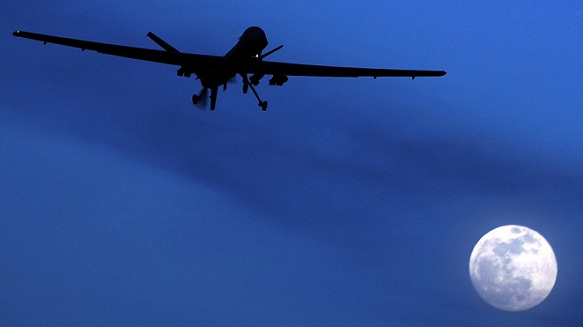
It seems especially troubling that anyone would suggest that stand-off warfare somehow negates the moral challenges associated with decisions that result in the taking of human life. In fact, it is quite possible that these type of targeting modalities produce unique moral challenges for the warrior. Underestimating the impact of having to set in motion kinetic weapons that kill others is unfortunate and misleading. Death and killing are an inevitable consequence of armed hostilities. While it is tempting to suggest that stand-off capabilities make this process easier for the warrior, the fact remains that moral individuals have to make those incredibly difficult decisions and have to live with the consequences of their actions.

There’s a certain moral clarity in close combat, to be sure, where one is personally at risk – exigency provides an often clear and unambiguous moral framework for the trigger puller, kill or be killed.  But that’s not the ideal kind of moral clarity; the ideal moral clarity allows for deliberation – and that deliberation is served by lowering personal risk to oneself and one’s forces and having time.  In other words, there’s another kind of moral clarity where the trigger puller – or the commander giving the order – is not at risk, does not have to consider the bare necessity of self-survival or the survival of those under one’s command, and can think harder about the strategic and tactical, moral and legal, reasons for pulling the trigger. It makes the moral decision harder, not easier, and perhaps not as clear as that of personal risk – but it is the kind of deliberative decision-making that drones (sometimes at least) allow us and which we should prefer, all things equal.

It therefore seems to me that stand-off warfare involves its own set of complex moral challenges for the warrior. For example, the process of going to work in the morning, engaging enemy belligerent targets with deadly force, and leaving that evening to return to the normalcy of the home and family place the warrior in an environment of conflicting contexts unlike any of his or her peers in the battle-space.  (Those who endured the two years of low intensity confrontations with the Panamanian Defense Forces in the late 1980s had a small taste of this, living in Panama with their families in the same place where they routinely conducted operations to defend U.S. facilities against the PDF.)

It is a mistake to assume killing, even in war, is easy. It is not. Indeed, the challenge of training warriors to kill on order has been a major focus of military training. As Telford Taylor noted, “war does not provide a license to kill; it creates a duty to kill.” I doubt that duty is easier to reconcile with moral instincts for a stand-off drone operator than a pilot engaged in close air support.

How stand-off warfare will impact the nature of armed hostilities is obviously an important and complex issue. Let’s not lose sight of the fact, however, that in the end it still requires us to call upon members of our society – individuals with exceptional moral and ethical instincts – to “pull a trigger.” I don’t think attenuation from the target makes that decision any easier.  It may in fact make it harder.
http://www.lawfareblog.com/2012/07/geoffrey-corn-responds-to-the-kas-post-on-mark-mazzettis-the-drone-zone/

The NFL and the LOAC (Following Illegal Orders)

by Travis Normand

Let me start by saying that this is an unusual post in that it has as much to do with football (NFL) as it does the LOAC.

While driving to work today, I was listening to a local sports radio station. One of the shows hosts, Nick Wright, brought up for discussion some comments that were apparently made the day before by Ted Johnson concerning “following orders in the NFL.”  While I can’t seem to find Ted Johnson’s comments, I did find the following quote from the shows website. It was found on the page that  displays the topics to be discussed during a particular show (and at what time).

 8:45 am – What do you make of what Ted Johnson said yesterday about following orders in the NFL?

Link

While searching for Ted Johnson’s comments, I found a couple of articles on the subject of “following orders” as a defense in relation to the New Orleans’ Saints (NFL) bounty program/scandal.  The following is from an article written by Mike Florio on July 7, 2012:

Lost at times in the analysis of the Saints alleged bounty program is the rigid, almost military hierarchy that brings structure to the inherent chaos of football.

Coaches give orders, and players follow orders.

In this case, with former Saints defensive coordinator Gregg Williams implementing a system that he reportedly used in at least two of the other cities where he coached, what options did his players have?  And so, at the June 18 appeal hearing, NFLPA outside counsel Jeffrey Kessler argued that the players “simply followed what their supervisors directed them to do.”

Link

The shows hosts went on to discuss the subject of how NFL players either follow the orders of their coaches or find themselves “blackballed” within the league.  The hosts discussed the culpability of the players (who claim to be simply following orders) in relation to the coaches who were actually giving the orders.  In referencing other comments (i.e. Ted Johnson) they discussed the idea of players being less culpable in regards to the bounty program due to the fact that they were just following orders.

Anyone familiar with the LOAC knows that a soldier’s excuse of “I was simply following orders” is not a defense to a crime.  In other words, a member of the military typically must follow the orders of a superior officer or face the consequences.  On the other hand, if a commanding officer issues an illegal order, the soldier receiving that order has a duty to not follow it.  If the soldier chooses to follow the illegal order, then the soldier is just as culpable for the resulting harm caused.  Further, “I was just following orders” is not a defense to the crime they have committed.  Fair or not, that is the law.

To understand the difference between an illegal and legal order, without turning this into a course on the LOAC, I will over simplify the explanation here.  In its simplest form, a commanding officer who orders his troops to engage an opposing army on the battlefield, is giving a legal order.  An example of this would be a commander ordering his troops to engage in a battle that is before them on the battlefield.  However, an illegal order would be this same officer ordering his troops to attack a small village that he knew had no army, no defenses, that posed no threat, was full of only civilians, and gave him no military advantage of any kind.

In terms of the NFL, I would imagine an illegal order would be for a coach to direct a player to commit an act that was against the rules of the game, especially when the act is aimed at purposefully causing injury to an opposing player.  A legal order would be one that was within the rules of the game, was for the purpose of winning the game, and advancing your teams strategic goals.

Under this framework, you can see that something such as a bounty program would easily be considered an illegal order.  Therefore, if the world of NFL football is so similar to the military, I would expect the rules to be somewhat similar as well.  In other words, when a coach issued the (illegal) order to hit another player for the purpose of causing injury, the player receiving the order had a duty to not follow that order (regardless of the consequences for doing so).

Following an illegal order puts the player in as culpable a situation as the coach and/or the NFL itself.

I am not in favor of drawing parallels between the military and athletes (at least not to this extreme), but if you are going to draw such a comparison and then try to use “I was just following orders” as a defense, you need to know what you are talking about.  After all, if the body that adjudicates the issue buys into the theory that  “the NFL is a lot like the military,” then they should reject your defense of “following orders” as insufficient.

Read more on this topic here:  Dave Gilbert posted a similar opinion on July 8, 2012 [Saints Players Were Just Following Orders? That’s No Excuse – WeGotThisCovered.com].  While his comments do not include any reference to the LOAC, his views seem to be fairly in-line with what I have said here.

The Legality of Drones Questioned by the UN

by Travis Normand

UN Rapporteur Questions Legality of Drone Strikes
June 22, 2012 by Kirsty Sutherland

At this week’s UN Human Rights Council meeting in Geneva, the use of drones has been denounced as undermining fundamental principles of international law.

UN Special Rapporteur on Extrajudicial, Summary or Arbitrary Executions Christof Heyns has openly condemned ongoing drone use by the United States in countries such as Pakistan.

Read more here.

Drone attacks discussed in UN Human Rights Council
19th June, 2012
Dawn.com

UN investigator: US dodging questions on drones
By FRANK JORDANS Associated Press
Posted: 06/20/2012 07:36:17 AM PDT

When UN human rights officials call, does the United States answer?
Posted By David Bosco Wednesday, June 20, 2012 – 2:59 PM

Some U.S. drone attacks may be war crimes
Published By United Press International

Defending armed drone use by calling them a valid response to the Sept. 11, 2001, terrorist attacks on the United States is unjustifiable, Christof Heyns, United Nations special rapporteur on extrajudicial, summary or arbitrary executions, told a U.N. Human Rights Council conference in Geneva, Switzerland, after Russia and China issued a joint statement to the council condemning drone attacks.

For the rest of this article, click here.

As a side note, is anyone actually surprised that Russia and China are against the use of drones by the U.S.?

US v. El-Hanafi (Cont.)

by Travis Normand

If you haven’t see the post that I re-blogged from Prof. Robert Chesney’s site, please take a look at it first.  The follow quote comes from his post.

U.S. Attorney Bharara said, “The pleas of these two avowed supporters of al Qaeda is a chilling reminder of the threat of homegrown terrorists and the unwavering vigilance that must be exercised so they can be thwarted – as they were in this case. It is also a reminder of the commitment that we share with our law enforcement partners to identify, prosecute and punish those who would do harm to the United States and its citizens.”

Beginning in 2007, El-Hanafi and Hasanoff conspired with others to support and receive assignments from al-Qaeda. In November 2007, Hasanoff received approximately $50,000 from a co-conspirator (CC-1), with the understanding that at least a portion of the money would be used to support the terrorist organization. In February 2008, El-Hanafi traveled to Yemen, where he met with two members of al-Qaeda. While in Yemen, El-Hanafi swore an oath of allegiance to al-Qaeda, received instructions from al-Qaeda on operational security measures, and received assignments to perform for al-Qaeda. Also while in Yemen, El-Hanafi instructed the members of al-Qaeda on how to communicate covertly over the Internet in a manner that would avoid law enforcement detection.

After El-Hanafi returned from Yemen, Hasanoff also swore allegiance to al-Qaeda. About three months later, in May 2008, El-Hanafi met with CC-1 in Brooklyn to discuss CC-1 also joining al-Qaeda, and Hasanoff and El-Hanafi subsequently had additional discussions with CC-1 about joining al-Qaeda. During the same approximate time period, El-Hanafi purchased a subscription for a software program that enabled him to communicate securely with others over the internet.

El-Hanafi and Hasanoff also helped finance the terror group by regularly sending money to al-Qaeda through international wire transfers and through couriers. El-Hanafi and Hasanoff also were interested in fighting with al-Qaeda in Afghanistan, Iraq and other locations abroad, and they discussed traveling to engage in jihad, although they never succeeded in participating in armed conflict.

After a  cursory reading of the article and opinion, I would say that El-Hanafi was a full member of al-Qaeda.  Therefore, while he may never have actually participated in a “fire fight,” he is still a party to the armed conflict that the US is currently involved in with al-Qaeda.  One must remember that the LOAC deals with status based targeting and not conduct based targeting.

With this view in mind, El-Hanafi would be a lawful military target no matter where he was found. While it is definitely possible for him to be arrested and prosecuted via the criminal justice system (as was done here); the real debate hovers around the issue of whether or not the US Military could have used deadly force against him as a measure of first resort.

Fact, Fiction, or merely Opinion…?

by Travis Normand

In his article on April 20th 2012, Bruce Ackerman stated the following quote as fact:

The risk of attacks from Yemen may be real. But the 2001 resolution doesn’t provide the president with authority to respond to these threats without seeking further congressional consent.

Mr. Ackerman may be 100% correct and there are undoubtedly many experts out there that share his point of view. However, one must not be confused by his factual assertion that the “2001 resolution doesn’t provide the president with the authority to respond to these threats . . . .”

If I am not mistaken, whether or not the President needs further congressional consent is exactly what makes this area of law so difficult. It is this point that many debate on a daily basis.

Again, I am not stating my own opinion on whether or not I believe the 2001 resolution gives such authority. I am merely pointing out that Mr. Ackerman’s statement could easily be read as a factual assertion.

If there is any question as to whether or not this is a settled discussion, one must only look to the fact that this was posted in the Opinions section of the WashingtonPost.com.

To read the rest of his column, go here!

“Sen. Paul proposes bill protecting Americans from drone surveillance” but is it Necessary?

by Jessica Poarch

This morning The Hill reported that on Tuesday Senator Paul introduced a bill that would require the Government to obtain a warrant before using Drones to conduct surveillance. This bill, entitled ‘‘Preserving Freedom from Unwarranted Surveillance Act of 2012,’’ prohibits the government from using drones to “gather evidence or other information pertaining to criminal conduct or conduct in violation of a statute or regulation except to the extent authorized in a warrant that satisfies the requirements of the Fourth Amendment….” (Sec 3) There are some exceptions to this requirement, mainly that a warrant is not needed for boarder surveillance, if there are exigent circumstances, or if there is a high risk of a terrorist attack based on “credible intelligence.” (Sec 4). If the Government fails to comply with this requirement, the evidence obtained can not be used in Court. (Sec 6).

In my opinion, this bill should be put in a pile with the rest of the election seasons ploys to play on the Nations sensitivities and garner votes. First, unless Drones are equipped with advanced x-ray and audio technology, this bill is a misapplication of the 4th Amendment. The 4th Amendment only applies to unwarranted government intrusion into a person’s reasonable expectation of privacy.  Activity undertaken in the open (i.e. visible from the air) does not receive protection. This would be no different than law enforcement officials sitting across the street with a high powered camera.

If Drone technology has advanced far enough to allow law enforcement officials to take x-ray images of the inside of buildings or record conversations that occur in buildings, then the 4th Amendment likely already provides protection as this case would be closely analogousness to currently controlling case law (ex: Katz, 389 U.S. 347 , providing 4th Amendment protection to a conversation in a public phone booth because Katz closed the phone booth door clearly intending to have a private conversation).

I too have concerns over allowing law enforcement officials to use Drones for ordinary crime control; however, a bill such as the one discussed above does not, in my opinion, provide any additional protection or truly address any privacy concerns. If Congress is truly concerned about law enforcement overstepping its bonds with the use of Drone technology it should find a more effective means to prevent it, such as tightening its purse strings and restricting the financial resources available for this form of surveillance.

The full Article: http://thehill.com/blogs/hillicon-valley/technology/232489-sen-paul-proposes-bill-protecting-americans-from-drone-surveillance

The Bill: http://thehill.com/images/stories/blogs/flooraction/jan2012/s3287.pdf

Concern grows over Predator Drone usage

by Travis Normand

While I understand the following rationale, and I even agree with it to a certain extent, my initial reaction is to defend the use of drones by the U.S.

Brennan said the [Obama] administration has determined it can conduct targeted drone strikes against suspected terrorists in order to prevent attacks on the U.S. and to save American lives, and he said there was nothing in international law that bans this. But Bellinger . . . says it doesn’t matter what technology is involved, whether it’s a drone or bullet, virtually no other country in the world buys into the U.S. rationale.

“This looks a lot like an assassination; the U.S. firmly believes that it is not — that this is a military action in self-defense against someone,” he said. “But the human rights community is growing increasingly concerned about what they call targeted killings of particular individuals.”

. . . .

Tom Parker, policy director for terrorism and counterterrorism at Amnesty international, says the U.S. needs to be careful because its rationale for the use of drones could be abused by others. For example, the Chinese could use it to go after people it considers a national security threat — maybe Uighur or Tibetan activists living in a third country, he says.

There is “absolutely nothing stopping them from using the same justification,” he said. “And, of course, terrorism is often in the eye of the beholder. You’re going to see states use this justification to carry out attacks on human rights activists and political opponents.”

Read the entire article here.

My argument would be rather simple, and it is that the U.S.’s drone usage is in direct response to our “war on terrorism.” This war was launched following the attacks on 9/11 and it has been one of the first of its kind. While conceptually new in terms of its global scope, the war is in fact real. We do have an armed military engaged in other countries and we are using drones to follow the enemy where ever they may run and hide.

In other words, if another country simply started using drones to take-out those it saw as undesirable, I would ask: (1) was the target a “terrorist” threat?; (2) by use of the drone, are you claiming to be at war with someone?; (3) what other efforts are you using in this war?; and (4) is the drone one of many different vehicles of war or is it your sole/primary means of attack?

Of course, such a construct is unworkable and would arguably place restrictions on drone usage. If nothing else, it would limit drone usage only against those you are already actively pursuing with a live military.

ABA Journal: Patriots Debate (Series)

by Travis Normand

Currently, these papers/essays are showing up in the magazine editions of the ABA Journal. I have read most of them so far and they are very well done. I found the first one, “Constitutional Dilemma: The Power to Declare War Is Deeply Rooted in American History,” to be a good refresher of my law school National Security course.

If you have time, I highly recommend them (especially if you are new to the subject of National Security).