Category Archives: LOAC

ICTY Appeals Panel Overturns War Crimes Convictions

by Jessica Poarch

This morning’s edition of Bloomberg Businessweek reported that the appeals panel for the ICTY overturned the convictions of General Ante Gotovina and General Malden Markac, both convicted by the Court in 2011 for war crimes committed in Operation Storm. The appeals panel disagreed with the trial court and found that “there was no excessive shelling of four towns by the Croats and that the mass departure of Serbs couldn’t be described as a ‘deportation.’” This ruling is final and will not be appealed.

Read the entire story here.

For the complete record of the trial visit the ICTY website.

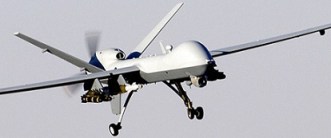
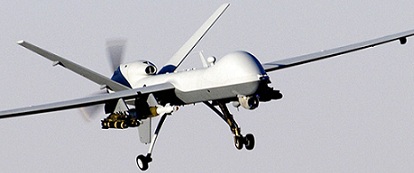
Iran Fires on US Predator Drone: An Armed Conflict?

by Jessica Poarch

This morning, CNN reported that last Thursday (1 November 2012), Iranian fighter jets fired on a U.S. Predator drone. The Iranian government claims that the drone was fired on after it had entered Iranian airspace; however, the Pentagon’s official statement is that the drone was past the 12 nautical mile limit and was therefore over international waters when fired upon. The drone was not damaged.

With the amount of tension surrounding Iran and its nuclear program, the question of whether or not this action constitutes an armed conflict is interesting. An International Armed Conflict (IAC) is (1) a conflict between States that (2) leads to the intervention of armed forces (for more information on the types of armed conflicts, see the “LOAC Basics” tab above).

Determining whether or not an IAC could exist in this circumstance requires meeting both prongs of the definition laid out above.

(1) I think the fact that there is a conflict between the U.S. and Iran is a given, globally with issues over the Iranian nuclear program and locally over the issue of airspace. Further, (2) the intervention of armed force by Iran is also clear as the attackers were fighter jets flown by Iranian military pilots.

If we assume these two prongs are conclusively established, the question becomes whether or not we need two armed parties in order to have an armed conflict? CNN’s article calls the drone a “U.S. Air Force drone,” so for the sake of argument, we will say that this drone is considered to be a part of the U.S. military forces (thereby eliminating the other looming questions of who is driving and regulating the drone). However, if the drone is not armed and is only doing surveillance, is it considered a party to the “intervention of armed forces”?

In reality, the question of whether firing on the drone constitutes an IAC or not is moot as the armed conflict, if there was one, is now over, and its limited duration lead to no meaningful application for the rest of the LOAC. Nevertheless, as students of the law and observers of international relations, we must take note of this event, hoping that it is just another example of the growing tensions between the U.S. and Iran, and not the first shots fired in America’s next major conflict in the Middle East.
LOAC Principles in Current Events: War vs Armed Conflict

by Jessica Poarch
October 4, 2012

Yesterday, mortars from the ongoing conflict in Syria crossed the border and killed 5 civilians in Turkey. In response, the Turkish government “pounded targets inside Syria on Thursday in retaliation…” In spite of the damage caused to the Turkish people, the Prime Minister of Turkey’s staff came out with statements against war with Syria. This is a clear example of the differences between “armed conflict” and “war.” Turkey has not made a formal declaration of war against Syria, therefore no state of “war” exists. However, an armed conflict does exist between the two nations. International Armed Conflict is defined as the “recourse to armed forces [by one or more states] against another state, regardless of the reasons or the intensity of [the] confrontation.” It is clear therefore that an International Armed Conflict exists between Turkey and Syria.

Article Review: Losing the Forest for the Trees: Syria, Law and the Imperatives of Conflict Recognition

by Jessica Poarch

Have you ever wondered how to tell when a riot or internal dispute becomes a non-international armed conflict falling under the regulation of Common Article 3 of the Geneva Conventions? If the answer is yes, I highly recommend reading  “Losing the Forest for the Trees: Syria, Law and the Imperatives of Conflict Recognition” by Laurie R. Blank & Geoffrey S. Corn. This article can be found on Professor Corns’ SSRN page to which the title above is hyper-linked.

In the Article, while arguing for a new approach to Conflict Classification, the authors provide detailed analysis on the history, purpose, and current test used to classify conflicts as well as an explanation as to why proper classifications of conflict are vital to the future of the LOAC.

Continue reading

ADVANCED COURSE ON THE LAW OF ARMED CONFLICT (LOAC)

by Travis Normand

Mark your calendars for the Advanced Course on the LOAC in Sanremo, Italy.  This course is sponsored by the International Institute of Humanitarian Law.

I first heard about the International Institute of Humanitarian Law a few years ago and have wanted to attend one of the organization’s workshops/conferences ever since.  My goal is to someday actually make it to Sanremo, Italy for one of these.

If you have the ability to attend, I have heard that it is more than worth the time and effort it takes to get there.

Advanced Course on the Law of Armed Conflict (LOAC)
1- 5 October 2012
Sanremo, Italy

The Advanced Course on Law of Armed Conflict (LOAC) is conducted in either English or French.  The Courses will run concurrently from 3 – 7 October 2011.  These courses provide a practical and contemporaneous consideration, at an advanced level, of LOAC issues with a particular focus on those impacting on interoperability in multinational operations.

Link to course website.

American Terrorism is a Criminal Matter

by Travis Normand

Here is another example of how terrorist activities are typically treated as a criminal matter, and not a LOAC matter, when they are attempted on U.S. soil.

US prosecutor: 18-year-old arrested for attempting to set off car bomb outside Chicago bar
Washington Post (WashingtonPost.com)
By Associated Press, Published 15 September 2012

CHICAGO — Undercover FBI agents arrested an 18-year-old American man who tried to detonate what he believed was a car bomb outside a downtown Chicago bar, federal prosecutors said Saturday.

Adel Daoud, a U.S. citizen from the Chicago suburb of Hillside, was arrested Friday night in an undercover operation in which agents pretending to be terrorists provided him with a phony car bomb.

Read the entire article HERE!

Continue reading

A Discussion on Syria

by Jessica Poarch

Today the Economist reported that: “August was certainly the bloodiest month so far [in the Syrian Conflict]: as many as 4,000 may have died, 3,000 of them civilians and rebels, the rest soldiers or pro-regime militiamen. The death toll now often tops 250 a day. The opposition reckons that 23,000-plus Syrians have been killed since protests began in March last year; the UN, more conservatively, puts the toll at 17,000.”  (Read the rest of the article here).

The persistent and growing bloodshed raise questions about whether or not the International Community is doing enough to support the rebel force or to bring an end to the conflict. In the same article sighted above, the Economist notes that foreign governments are not ready for direct intervention into this Conflict, but should they be? For additional information on the debate check out this mornings Daine Rehm Show entitled “The Deepening Conflict In Syria“.

For me, as a student of LOAC, this is a reminder that there is no international police force to impose the LOAC rules on nations and people at war; a reminder that, as Gary Solis wrote in his book*, “At the best of times, LOAC is never more then imperfectly observed, and at the worst of times is very poorly, observed indeed. In fact, one must  admit that LOAC really does not work well at all. However, … we should perhaps not so much complain that the law of war does not work well, as marvel that it works at all.”

[*] Gary D. Solis, The Law of Armed Conflict: International Humanitarian Law in War, p 8.

A “Must Read” Article for Anyone New to the LOAC

by Travis Normand

When I started this blog, one of my main purposes was to create a place where people could go to learn about the Law of Armed Conflict (LOAC or IHL).  It was my hope to create a place where you could find (1) basic information that facilitates an understanding of the LOAC, (2) links to other online LOAC resources, (3) current news concerning the LOAC, and (4) some commentary on the LOAC-related current events and news.

So, in keeping with No. 2 above, I must post an article that I found this morning:

Continue reading

Red Cross Rules Syria is in Civil War

by Jessica Poarch

The following excerpt/quote is from an article that appeared in the TheGuardian.com on July 15, 2012 titled: Bashar al-Assad cold face prosecution as Red Cross rules Syria is in civil war – Declaration signals that Geneva-based organisation regards all civilians and detainees as protected under international law

“The ICRC ruling marks a significant moment in the Syrian uprising, which during the past year has changed from a series of anti-regime protests into a full-blown insurrection. It had previously said that localised states of civil war existed in Homs, Hama and Idlib. The ICRC is considered to be a guardian of the Geneva convention, which prescribes the rules of warfare. The declaration signals that the Geneva-based organisation regards all civilians and detainees as protected under international law.

Alexis Heeb, an ICRC spokesman in Geneva, said: “Now there are many places in Syria that fulfil requirements to be a called a non-international armed conflict, and the situation is fluid and constantly evolving.

‘What matters is that humanitarian law applies across the country, and that means civilians and those no longer taking part in the conflict are protected.’

Read the full story HERE  [http://www.guardian.co.uk/world/2012/jul/15/syria-civil-war-red-cross?cid=nlc-dailybrief-daily_news_brief-link4-20120716]

Continue reading